Leash Training a Puppy: Expert Tips for Confident Walks
Published by: Champion Petfoods Global Digital Team
Reviewed by: Champion Petfoods Global Marketing Team and Veterinary & Nutrition Science Experts
4 Key Takeaways
-
Start Early and Indoors: The ideal window for puppy leash training is between 8 and 16 weeks, beginning in a low-distraction indoor environment.
-
Choose the Right Gear: Select a lightweight, comfortable collar or harness and a quality leash for puppy training to ensure safety and ease.
-
Use Positive Reinforcement: Reward your puppy with praise and treats to encourage loose-leash walking and build their confidence.
-
Fuel Their Development: Support your puppy’s growth and training energy with Biologically Appropriate diets rich in WHOLEPREY ingredients.
Leash Training a Puppy: Expert Tips for Confident Walks
Bringing a new puppy into your pack is an exciting adventure and teaching them to walk confidently on a leash is a crucial developmental milestone. Leash training for a puppy is about more than just getting from point A to point B; it is about building a strong bond, ensuring their safety, and setting them up for a lifetime of exploration.
It is completely normal to encounter moments of frustration. Your puppy might pull, bite the leash, or simply freeze in their tracks. These behaviors are part of the learning process. By embracing patience and a positive reinforcement philosophy, you can transform these challenges into opportunities for growth. At ORIJEN™, we believe in prioritizing your puppy’s well-being and natural behavior, guiding them to thrive according to their nature. Discover our proven puppy training tips for stress-free leash training and confident walks.
When to Start Leash Training Your Puppy: Setting the Right Foundation
The ideal window to begin puppy leash training (1) is during their key socialization period, typically between 8 and 16 weeks of age. During this time, puppies are highly receptive to new experiences, making it the perfect opportunity to introduce the leash and collar.
It is important to distinguish between formal training and early leash exposure. At this stage, the goal is simply to help your puppy feel comfortable wearing their gear. Start indoors, in a familiar and low-distraction environment. Let them wear the collar or harness for short periods while offering praise and rewards.
While puppy socialization is critical during this window, you must also consider vaccination safety. Before your puppy is fully vaccinated, avoid high-traffic areas where other dogs frequent. Instead, practice in your home, backyard, or carry them in safe outdoor spaces to expose them to new sights and sounds safely.
Essential Gear for Leash Training: Choosing the Right Equipment
Selecting the right equipment is essential for your puppy’s comfort and safety. The best leash for puppy training is typically a standard, lightweight 4-to-6-foot leash. Avoid retractable leashes during the training phase, as they can teach your puppy that pulling rewards them with more freedom.
When deciding between a harness and a collar, consider your puppy’s breed and temperament. Harnesses are often recommended for small breeds or puppies prone to pulling, as they distribute pressure across the chest rather than the delicate neck area. Collars are suitable for many puppies, provided they are lightweight and properly fitted.
Look for gear with adjustable straps to accommodate your growing puppy, and choose soft, durable materials that will not chafe their skin. The goal is to ensure the equipment feels like a natural extension of their body, not a heavy burden.
Step-by-Step Guide to Leash Training: Building Confidence and Skills
A structured approach is key to how to leash train a puppy successfully. Follow these steps to build their skills and confidence:
-
Introduce the Gear: Let your puppy sniff and inspect the collar and leash. Reward them for showing interest.
-
Practice Indoors: Attach the leash and let them drag it around the house under supervision. This helps them get used to the feeling without any tension.
-
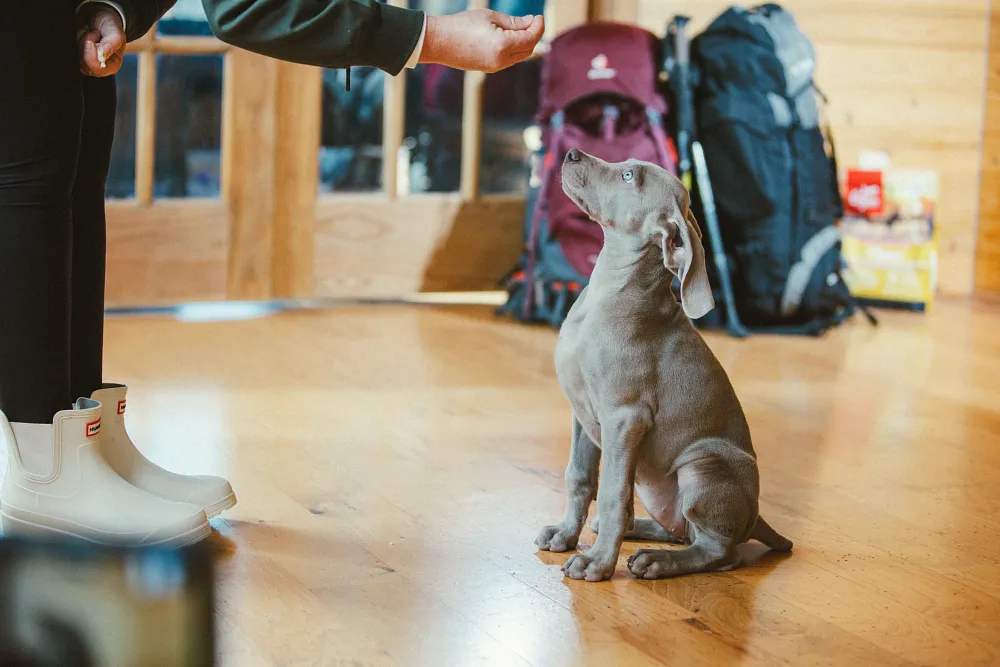
Encourage Following: Pick up the leash and encourage your puppy to follow you using an enthusiastic voice and treats. Reward them when they walk by your side.
-
Practice Loose-Leash Walking: The goal is loose-leash walking, where the leash has a gentle “J” shape. If your puppy pulls, stop walking immediately. Wait for them to return to your side or create slack in the leash before continuing.
-
Transition Outdoors: Once your puppy is comfortable indoors, move to a quiet outdoor area like your backyard. Gradually increase the level of distraction as they master each environment.
Use positive reinforcement to build trust and encourage good behavior. Reward desired actions immediately with enthusiastic praise and high-value treats, like our ORIJEN Freeze-Dried Dog Treats, made with richly nourishing ingredients your puppy will love. Keep training sessions short, around 5 to 10 minutes, to maintain focus and prevent fatigue. For more comprehensive guidance, explore our Puppy Masterclass.
Troubleshooting Tips: Common Leash Training Challenges
Even with the best approach, you will likely encounter some common challenges. Here is how to handle them:
-
Biting the Leash: This is often a sign of playfulness or overexcitement. Redirect their attention with a toy or ask for a simple command like “sit.” Reward them when they drop the leash.
-
Pulling: If your puppy pulls, stop moving. Do not yank the leash back. Wait for them to release the tension, then reward and resume walking.
-
Stopping or Freezing: If your puppy refuses to move, they may be overwhelmed or fearful. Crouch down, use a happy voice, and offer a treat to encourage them forward. Never drag them.
It is important to differentiate between fear-based reactions and overexcitement. A fearful puppy may tuck their tail and try to hide, while an overexcited puppy may lunge or bark. For fear, create distance from the trigger and reward calm behavior. For overexcitement, practice focus exercises to keep their attention on you.
To prevent leash reactivity towards other dogs or people, reward your puppy for looking at you when distractions appear. Patience and consistency are your best tools. If you find yourself struggling, do not hesitate to seek help from a certified professional trainer or veterinarian.
A Holistic Approach to Puppy Wellness: Supporting Training Success
Growing puppies require nutrient-dense, complete, and balanced diets to support their rapid physical development and the energy demands of daily activity and training. ORIJEN™ Diets are crafted to provide the superior nutrition your puppy needs to fulfill their potential.
Our Biologically Appropriate recipes mirror the ancestral diet of dogs, featuring 85% premium animal ingredients*. Guided by our WHOLEPREY Nutrition philosophy, our diets include nutrient-dense meat, organs, and bone, ensuring your puppy receives the essential nutrients they need to thrive. The first FIVE ingredients always include fresh or raw animal protein, delivering unsurpassed quality and taste.
By choosing ORIJEN™ pet food, you are partnering with us in your puppy’s development, complementing your training efforts with the nourishment they need to stay focused, active, and healthy.
Continuing the Training Journey: From Puppyhood to Adulthood
Leash training is an ongoing process that evolves as your puppy matures. During adolescence, it is common for dogs to experience temporary regressions in their training. Maintain your consistency and continue using positive reinforcement to guide them through this phase.
As your dog grows, encourage them to explore new environments and activities. You can introduce advanced training techniques, such as off-leash recall in safe, enclosed areas, or agility training to keep them physically and mentally stimulated.
Structured learning opportunities, such as group classes or professional guidance, can support long-term success and provide valuable socialization. Remember that consistency, patience, and positive reinforcement are the keys to strengthening the bond between you and your dog over time.
*Approximate and derived from the unprocessed state of the ingredients.
Article Sources:
1) VCA Animal Hospitals
Frequently Asked Questions
What is the best age to start leash training a puppy?
The ideal time to start puppy leash training is between 8 and 16 weeks of age. This is a critical socialization period where puppies are highly adaptable and open to learning new experiences.
How do I stop my puppy from biting the leash?
Leash biting is common and often stems from excitement. Redirect your puppy’s attention by offering a toy or asking them to perform a command like “sit.” Reward them with praise or a treat when they release the leash.
Should I use a collar or a harness for leash training?
Both can be effective, but a harness is often the best leash for puppy training, especially for small breeds or puppies that pull, as it prevents pressure on their delicate necks. Ensure whichever you choose is lightweight and fits comfortably.
What should I do if my puppy refuses to walk on the leash?
If your puppy freezes, they may be overwhelmed. Do not pull or drag them. Instead, crouch down, use an encouraging voice, and offer a high-value treat to coax them forward. Keep initial sessions short and positive.
How does nutrition impact my puppy’s training?
Training requires focus and energy. A nutrient-dense, Biologically Appropriate diet, like ORIJEN™ Recipes, provides the premium animal ingredients necessary to support your puppy’s cognitive development and physical stamina during training sessions.